

Catalog Advanced Search
-
Contains 1 Component(s) Recorded On: 09/22/2026
Is your credit team still tracking lien waivers by hand while risk keeps piling up? In construction, lien waivers are your best protection, and handled the wrong way, your biggest exposure. Credit departments are stretched thinner every year, and manual waiver processing costs real time and creates real risk. AI-driven automation is changing that, and the credit teams adopting it now are seeing the difference. Join us for a fast-paced, practical session on how AI and intelligent automation are changing lien waiver management: cutting processing time, reducing costly errors, and giving credit professionals hours back in their week. You'll walk away knowing how to: Use AI-powered tools to automate waiver collection, review, and tracking, so there's no more manual data entry or chasing signatures Use automated insights to instantly identify who holds lien rights and flag risk before it escalates Stay ahead of recent legal developments shaping lien rights and enforcement Apply automated tools to protect assets and recover what you're owed with less manual effort Build a more resilient credit department using the latest in credit technology Whether you're a credit manager, credit analyst, or risk professional in construction, this session gives you the tools and strategy to work smarter, reduce exposure, and free your team for higher-value work. See how AI is changing lien waiver management, and what it means for your team.
Is your credit team still tracking lien waivers by hand while risk keeps piling up?
In construction, lien waivers are your best protection, and handled the wrong way, your biggest exposure. Credit departments are stretched thinner every year, and manual waiver processing costs real time and creates real risk. AI-driven automation is changing that, and the credit teams adopting it now are seeing the difference.
Join us for a fast-paced, practical session on how AI and intelligent automation are changing lien waiver management: cutting processing time, reducing costly errors, and giving credit professionals hours back in their week.
You'll walk away knowing how to:
- Use AI-powered tools to automate waiver collection, review, and tracking, so there's no more manual data entry or chasing signatures
- Use automated insights to instantly identify who holds lien rights and flag risk before it escalates
- Stay ahead of recent legal developments shaping lien rights and enforcement
- Apply automated tools to protect assets and recover what you're owed with less manual effort
- Build a more resilient credit department using the latest in credit technology
Whether you're a credit manager, credit analyst, or risk professional in construction, this session gives you the tools and strategy to work smarter, reduce exposure, and free your team for higher-value work. See how AI is changing lien waiver management, and what it means for your team.
About the Speakers
Alec Papesch, NCS Credit

Alec Papesch is the Director of Strategic Partnerships at NCS Credit, the industry's only B2B full-service provider of Notice & Mechanic’s Lien, UCC Filings, and Commercial Collection services. Alec consults Credit Associations and Industry Trade Groups nationwide, providing expert guidance on the complexities of Construction Credit and the Uniform Commercial Code (UCC). Alec specializes in leveraging technology to improve operational efficiency.
-
You must log in to register
- Non-member - $195
- Member - $95
- CGA - $95
- More Information
-
Contains 1 Component(s) Recorded On: 08/31/2026
Latin America offers tremendous business opportunity, but it is not a single market, and a one-size-fits-all approach to credit rarely works. Join us for a practical discussion of the factors B2B credit professionals should consider when evaluating customers, managing risk and supporting sales throughout the region. Whether your company is beginning to do business in Latin America, expanding its presence or managing an established portfolio, this webinar will provide useful perspective for navigating the region’s evolving business environment and making more informed credit decisions.
Latin America offers tremendous business opportunity, but it is not a single market, and a one-size-fits-all approach to credit rarely works. Join us for a practical discussion of the factors B2B credit professionals should consider when evaluating customers, managing risk and supporting sales throughout the region.
Whether your company is beginning to do business in Latin America, expanding its presence or managing an established portfolio, this webinar will provide useful perspective for navigating the region’s evolving business environment and making more informed credit decisions.
About the Speakers
Alfredo Puerta, CICP, Credit & Finance Manager, Latin America Polymers Quimtec Polymers

Highly competitive executive with 20 years of successful experience in Consulting, Banking, Finance, & Accounting. Extensive background in, Consumer and corporate credit and Banking, Financial Planning and Analysis.
MBA and CICP, Excellent qualifications in implementing solutions to design and improve process performance. Proven ability in managing international and culturally diverse groups, achieving high impact results. Exceptional interpersonal and communication skills
Specialties: Market Research, Corporate Finance, Company and Investment Valuation, International Credit.
-
You must log in to register
- Non-member - $195
- Member - $95
- CGA - $95
- More Information
-
You must log in to register
-
Contains 1 Component(s) Recorded On: 08/27/2026
Join us for a focused look at the credit and risk landscape in Canada. Learn about key differences in Canadian credit laws, payment terms, collection practices, and commercial customs compared to the U.S. We’ll cover the impact of currency fluctuations, cultural considerations in business communication, resources to help you assess credit risk and manage accounts receivable effectively when working with Canadian customers, and an update for 2026 on the USMCA and US/Canada relations.
Join us for a focused look at the credit and risk landscape in Canada. Learn about key differences in Canadian credit laws, payment terms, collection practices, and commercial customs compared to the U.S. We’ll cover the impact of currency fluctuations, cultural considerations in business communication, resources to help you assess credit risk and manage accounts receivable effectively when working with Canadian customers, and an update for 2026 on the USMCA and US/Canada relations.
About the Speakers
Hubert Sibre, Partner, Miller Thomson LLP

Hubert Sibre is a partner in business law at Miller Thomson’s Montréal office. He advises companies facing high-risk situations, from large international corporations to local entrepreneurs. With expertise in restructuring, insolvency, and commercial litigation, as well as experience in complex transactions in commercial and real estate matters, Hubert is a sought-after advisor who helps clients navigate major challenges. A formidable litigator, he has appeared at all levels of court, including the Supreme Court of Canada on several occasions.
Hubert teaches and lectures in Canada and abroad on securities law, restructuring, insolvency, and credit law. A respected author, he is a dynamic speaker who regularly participates in conferences. His publications focus on civil procedure and securities enforcement, while his presentations cover securities law, restructuring, insolvency, and credit law. Well-regarded in the legal community, Hubert is particularly recognized for his commitment to youth, sports, education, and entrepreneurship.
A graduate of the Université de Montréal, Hubert has been recognized as one of Canada’s leading litigators by Legal 500 and Benchmark Litigation Canada. He is also a Fellow of the Litigation Counsel of America and is noted by Best Lawyers Canada for his excellence in commercial litigation and expertise in restructuring and insolvency.
-
You must log in to register
- Non-member - $195
- Member - $95
- CGA - $95
- More Information
-
You must log in to register
-
Contains 1 Component(s) Recorded On: 08/11/2026
Invalid deductions do more than delay payment. They distort aging, consume staff time, create friction between departments, and can quietly become accepted as a cost of doing business. This webinar will help credit and collections teams build a practical process for identifying, investigating, resolving, and preventing invalid deductions while maintaining productive customer relationships. Participants will learn how to distinguish legitimate disputes from avoidable or unsupported deductions, establish clear internal ownership, use escalation appropriately, and communicate firmly without making every deduction conversation adversarial.
Invalid deductions do more than delay payment. They distort aging, consume staff time, create friction between departments, and can quietly become accepted as a cost of doing business.
This webinar will help credit and collections teams build a practical process for identifying, investigating, resolving, and preventing invalid deductions while maintaining productive customer relationships. Participants will learn how to distinguish legitimate disputes from avoidable or unsupported deductions, establish clear internal ownership, use escalation appropriately, and communicate firmly without making every deduction conversation adversarial.
About the Speakers
Timothy Lane, Arcosa

Experienced Accounts Receivable Specialist with a demonstrated history of working in the consumer electronics industry. Skilled in Graphical User Interface (GUI), Microsoft Excel, Tableau, OneNote, and Account Management. Strong accounting professional with a Bachelor’s Degree focused in Business Administration and Management, General from Cameron University.
-
You must log in to register
- Non-member - $195
- Member - $95
- CGA - $95
- More Information
-
You must log in to register
-
Contains 1 Component(s) Recorded On: 08/10/2026
The true future of AI isn’t about replacing human workers; it’s about super-powering them. When we treat AI purely as a tool for automation, we risk losing the critical thinking, creativity, and unique intuition that only humans bring to the table. This session explores a vital mindset shift: moving away from Artificial Intelligence as a substitute for human labor, and toward Augmented Intelligence—a collaborative partnership where technology enhances our cognitive abilities rather than automating our processes entirely. Together, we will discover how to design workflows where humans stay firmly in the driver’s seat, using AI to amplify our potential, solve complex problems faster, and elevate our creative output
The true future of AI isn’t about replacing human workers; it’s about super-powering them. When we treat AI purely as a tool for automation, we risk losing the critical thinking, creativity, and unique intuition that only humans bring to the table. This session explores a vital mindset shift: moving away from Artificial Intelligence as a substitute for human labor, and toward Augmented Intelligence—a collaborative partnership where technology enhances our cognitive abilities rather than automating our processes entirely. Together, we will discover how to design workflows where humans stay firmly in the driver’s seat, using AI to amplify our potential, solve complex problems faster, and elevate our creative output
About the Speakers
Burton Kelso, Tech Expert, Integral

Burton Kelso is the owner and Chief Technology Expert at Integral, a computer repair and IT Managed Services Support Company helping homes and business conquer their computer challenges. He is also a two-time TEDx keynote speaker and expert on cybersecurity, artificial intelligence (AI), and social media marketing as well as frequent on-air TV & radio tech expert appearing on shows across the country.
-
You must log in to register
- Non-member - $195
- Member - $95
- CGA - $95
- More Information
-
You must log in to register
-
Contains 1 Component(s) Recorded On: 07/29/2026
The Workforce Is Unwell A Framework for Leaders Who Dare to Care Differently Building True Well-Being in the Modern Workplace “Nobody wants to work anymore.” We’ve all heard it. Maybe in a news headline. Maybe from an older relative. Maybe whispered to yourself while struggling to sleep on Sunday night. People want to work—but not like this. Gallup recently found that 79% of the global workforce is disengaged, costing the economy $8.9 trillion annually. Burnout isn't a badge of honor. Hustling isn't a growth strategy. And the leadership playbook we inherited was written for a workforce that no longer exists. In this candid keynote, Anti-Career Coach® Danielle Roberts traces how three seismic cultural shifts damaged worker well-being—and offers a practical, psychology-backed framework for companies ready to restore it. Drawing from her own journey through loss, layoffs, and radical reinvention, she introduces the 3 Cs Framework—the human-centered principles that help teams thrive across generations. Attendees will leave with: An understanding of why the old success playbook no longer works (and the cultural forces that broke it) The 3 Cs Framework: A memorable, actionable model for building engagement, trust, and innovation Real-time audience engagement: interactive reflection prompts and social media moments for levity and connection Simple practices they can implement immediately on Monday to bridge performance and well-being
The Workforce Is Unwell
- A Framework for Leaders Who Dare to Care Differently
- Building True Well-Being in the Modern Workplace
“Nobody wants to work anymore.”
We’ve all heard it. Maybe in a news headline. Maybe from an older relative. Maybe whispered to yourself while struggling to sleep on Sunday night.
People want to work—but not like this.
Gallup recently found that 79% of the global workforce is disengaged, costing the economy $8.9 trillion annually.
Burnout isn't a badge of honor. Hustling isn't a growth strategy. And the leadership playbook we inherited was written for a workforce that no longer exists.
In this candid keynote, Anti-Career Coach® Danielle Roberts traces how three seismic cultural shifts damaged worker well-being—and offers a practical, psychology-backed framework for companies ready to restore it.
Drawing from her own journey through loss, layoffs, and radical reinvention, she introduces the 3 Cs Framework—the human-centered principles that help teams thrive across generations.
Attendees will leave with:
- An understanding of why the old success playbook no longer works (and the cultural forces that broke it)
- The 3 Cs Framework: A memorable, actionable model for building engagement, trust, and innovation
- Real-time audience engagement: interactive reflection prompts and social media moments for levity and connection
- Simple practices they can implement immediately on Monday to bridge performance and well-being
This on-demand webinar is available for 14 days after purchase.
A.I. offers powerful tools for business growth and innovation, but it also provides cybercriminals with advanced capabilities to launch more sophisticated, personalized, and rapid attacks. This webinar will explore the evolving threat landscape and provide the knowledge and strategies credit professionals need to defend their organization. Integral Chief Technology Expert, Burton Kelso will discuss how A.I. is being deployed offensively and defensively and provide actionable steps to fortify your business against AI-powered threats. Learn to leverage AI for a proactive security posture and discover the essential human-centric practices that remain the cornerstone of any strong defense.
About the Speakers
Danielle Roberts, Speaker, author, workplace well-being advocate, and multimedia content creator also known as the Anti-Career Coach®

Danielle Roberts is a workplace wellness advocate, keynote speaker and certified coach who challenges conventional ideas of success and helps people and organizations move beyond hustle culture.
Drawing on more than a decade of experience in career development, she explores how work impacts well-being and how more sustainable, purpose-driven systems can be built.
Known as the “Anti-Career Coach,” she has been featured in national and global news outlets including NBC, Entrepreneur, and Forbes. Her TEDx Talk, “Why Working Harder Isn’t Working,” has more than 54,000 views on YouTube, and her debut book is on the way.
-
You must log in to register
- Non-member - $195
- Member - $95
- CGA - $95
- More Information
-
Contains 1 Component(s) Recorded On: 07/27/2026
Join NACM CEO Steve Shivak and Board Chair Jason Mott for an open conversation about the future of the NACM. Hear updates on key initiatives, organizational priorities, and what's ahead for NACM, followed by an opportunity to ask questions and share your thoughts. Stay informed, stay engaged, and be part of the conversation.
This on-demand webinar is available for 14 days after purchase.
Join NACM CEO Steve Shivak and Board Chair Jason Mott for an open conversation about the future of the NACM. Hear updates on key initiatives, organizational priorities, and what's ahead for NACM, followed by an opportunity to ask questions and share your thoughts. Stay informed, stay engaged, and be part of the conversation.
Speakers
Steve Shivak MS, CAE, President, NACM

Steve brings more than 25 years of senior leadership experience guiding national and global professional associations through strategic transformation and operational excellence. As a Certified Association Executive, he has built a distinguished career strengthening organizational sustainability, expanding non-dues revenue and fostering strong federation-model partnerships—skills that align directly with NACM’s mission and commitment to advancing credit and financial professionals.
Jason Mott CCE, Credit Manager, Seven Hills Livestock Farm, LLC

Jason brings nearly three decades of experience in B2B credit. With a strong work ethic, he has woven his passions for agriculture and credit into a distinguished and rewarding career.
Despite his professional accomplishments, Mott’s most important role continues to be husband to his wife, Rebecca, father to sons Andy and Aaron and grandfather to Evelyn, Stella and Colter. Apart from running his family Wagyu cattle operation, Seven Hills Livestock Farm, Mott enjoys hunting, fishing and cheering on his home sports teams.
-
You must log in to register
- Non-member - Free!
- Member - Free!
- CGA - Free!
- More Information
-
You must log in to register
-
Contains 1 Component(s) Recorded On: 07/15/2026
A.I. offers powerful tools for business growth and innovation, but it also provides cybercriminals with advanced capabilities to launch more sophisticated, personalized, and rapid attacks. This webinar will explore the evolving threat landscape and provide the knowledge and strategies credit professionals need to defend their organization. Integral Chief Technology Expert, Burton Kelso will discuss how A.I. is being deployed offensively and defensively and provide actionable steps to fortify your business against AI-powered threats. Learn to leverage AI for a proactive security posture and discover the essential human-centric practices that remain the cornerstone of any strong defense.
This on-demand webinar is available for 14 days after purchase.
A.I. offers powerful tools for business growth and innovation, but it also provides cybercriminals with advanced capabilities to launch more sophisticated, personalized, and rapid attacks. This webinar will explore the evolving threat landscape and provide the knowledge and strategies credit professionals need to defend their organization. Integral Chief Technology Expert, Burton Kelso will discuss how A.I. is being deployed offensively and defensively and provide actionable steps to fortify your business against AI-powered threats. Learn to leverage AI for a proactive security posture and discover the essential human-centric practices that remain the cornerstone of any strong defense.
About the Speakers
Burton Kelso, Integral
Burton Kelso isn’t just a tech expert; he’s the bridge between complex innovation and human success. As a 2X TEDx keynote speaker and a recurring on-air technology contributor for major networks, Burton has spent decades demystifying the digital landscape for millions. Whether he’s revealing the transformative power of AI, fortifying a company’s cybersecurity, or revolutionizing digital marketing strategies, Burton delivers high-energy, actionable insights that move the needle. He doesn't just talk about the future—he gives your audience the tools to build it
-
You must log in to register
- Non-member - $195
- Member - $95
- CGA - $95
- More Information
-
You must log in to register
-
Contains 1 Component(s) Recorded On: 06/22/2026
Our webinar leader, Ed Bell, will discuss the critical role of know your customer (KYC) from an international standpoint, highlighting how cultural, economic and regulatory differences impact credit. During this webinar, we’ll explore the critical role of know your customer (KYC) from an international standpoint, highlighting how cultural, economic and regulatory difference impact credit management strategies.
This on-demand webinar is available for 14 days after purchase.
Our webinar leader, Ed Bell, will discuss the critical role of know your customer (KYC) from an international standpoint, highlighting how cultural, economic and regulatory differences impact credit.
During this webinar, we’ll explore the critical role of know your customer (KYC) from an international standpoint, highlighting how cultural, economic and regulatory difference impact credit management strategies.
About the Speakers
Ed Bell, PhD, CBA, ICCE, Former Senior Manager, Credit Administration for W. W. Grainger Inc., (Retired)

Ed has a deep passion for education and learning. Ed earned a Bachelor’s Degree in Business Administration, an MBA in Management and Finance and a Doctorate in Business Administration. Ed also earned NACM’s Credit Business Associate (CBA) designation, FCIB’s Certified International Credit Professional (CICP) designation by successfully completing the International Credit & Risk Management course and went on to earn FCIB’s prestigious International Certified Credit Executive (ICCE) designation.
Ed believes that education is a lifelong journey and continues to learn and share his expertise through serving as a speaker at many local and national NACM, CFDD, and FCIB events including the NACM Credit Congress. Because of Ed’s leadership and contributions, FCIB was able to develop and produce the “Going Global” series, designed to build core competencies of today’s global credit professional.
Ed is a member of FCIB, the Credit and Financial Development Division (CFDD) and the Credit Research Foundation. Ed served on the NACM National Board of Directors and the FCIB Board of Directors in 2016 and 2017. Ed remains on the FCIB Advisory Board.
-
You must log in to register
- Non-member - $195
- Member - $95
- CGA - $95
- More Information
-
You must log in to register
-
Contains 1 Component(s) Recorded On: 06/22/2026
The speakers will first discuss the importance of a properly completed and executed credit application to a creditor’s decision to extend credit and fully realize upon risk mitigation tools to support an increased credit line and increase recoveries from financially distressed customers (such as letters of credit, guaranties, purchase money security interests/consignments, and credit insurance). The speakers will then discuss the importance of including favorable, carefully crafted terms and conditions as part of a credit application and in contracts with your customer to enhance the likelihood of enforceability and collectability, avoid pitfalls like the “battle of the forms” and minimize liability. Examples of key terms will also be provided along with a discussion of how those terms can be incorporated as part of the credit application and other contracts with a customer.
This on-demand webinar is available for 14 days after purchase.
The speakers will first discuss the importance of a properly completed and executed credit application to a creditor’s decision to extend credit and fully realize upon risk mitigation tools to support an increased credit line and increase recoveries from financially distressed customers (such as letters of credit, guaranties, purchase money security interests/consignments, and credit insurance). The speakers will then discuss the importance of including favorable, carefully crafted terms and conditions as part of a credit application and in contracts with your customer to enhance the likelihood of enforceability and collectability, avoid pitfalls like the “battle of the forms” and minimize liability. Examples of key terms will also be provided along with a discussion of how those terms can be incorporated as part of the credit application and other contracts with a customer.
About the Speakers
Bruce Nathan, Esq, Lowenstein Sandler LLP

With more than 35 years of experience in the bankruptcy and insolvency field, Bruce Nathan is a recognized leader nationwide in trade creditor rights and representation of trade creditors in bankruptcy and other legal matters. He has represented trade and other unsecured creditors, unsecured creditors' committees, secured creditors, and other interested parties in many of the larger Chapter 11 cases that have been filed. Bruce also handles letters of credit, guarantees, security, consignment, bailment, tolling, and other agreements and legal credit issues for the credit departments of institutional clients.
Among his various legal recognitions, Bruce received the Top Hat Award in 2011, a prestigious annual award honoring extraordinary executives and professionals in the credit industry. He was co-chair of the Avoiding Powers Committee, which worked with the American Bankruptcy Institute's (ABI) Commission to Study the Reform of Chapter 11, participated in ABI's Great Debates at its 2010 Annual Spring Meeting—arguing against repeal of the special BAPCPA protections for goods providers and commercial lessors—and was a panelist for a session sponsored by ABI. He is a frequent presenter at industry conferences throughout the country, as well as a prolific author regarding bankruptcy and creditors' rights topics in various legal and trade publications. Bruce is a co-author of Trade Creditor Remedies Manual: Trade Creditors' Rights under the UCC and the U.S Bankruptcy Code, published by ABI at the end of 2011. He also has contributed to ABI Journal and is a former member of ABI's Board of Directors and former co-chair of ABI's Unsecured Trade Creditors Committee.
Andrew Behlmann, Esq, Lowenstein Sandler LLP
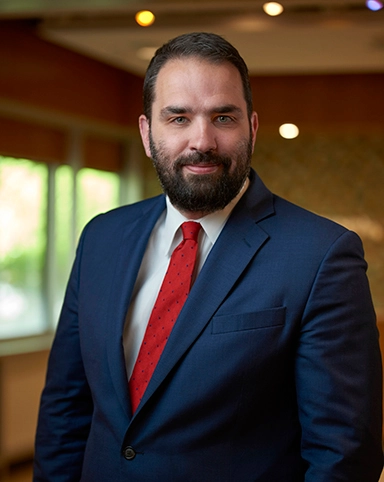
Andrew Behlmann leverages his background in corporate finance and management to approach restructuring problems, both in and out of court, from a practical, results-oriented perspective. With a focus on building consensus among multiple parties that have competing priorities, Andrew is equally at home both in and out of the courtroom. He has a track record of turning financial distress into positive business outcomes. Clients value his counsel in complex Chapter 11 cases, where he represents debtors, creditors' committees, purchasers and investors.
Andrew writes and speaks frequently about bankruptcy matters and financial issues. Before becoming a lawyer, he worked in senior financial management at a midsize, privately held company.
-
You must log in to register
- Non-member - $195
- Member - $95
- CGA - $95
- More Information
-
You must log in to register